Are you a road contractor, government infrastructure buyer, pavement maintenance company, or equipment dealer searching for reliable asphalt production machinery? This detailed guide explains exactly what a hot mix asphalt plant is — and why the UNIQUEMAC mobile hot mix asphalt plant is one of the most practical investment choices for your road projects.
1. What Exactly Is a Hot Mix Asphalt Plant?
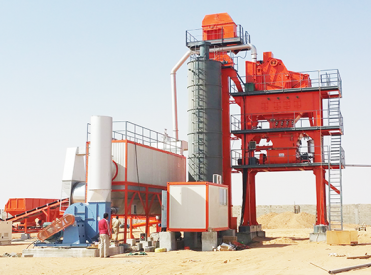
A hot mix asphalt plant — often called an HMA plant, asphalt mixing plant, or asphalt batching plant — is professional industrial equipment engineered specifically to produce hot mix asphalt, the core paving material used for highways, municipal roads, rural roads, airport runways, parking lots, port yards, and pavement repair work.
ts working principle is straightforward. The plant accurately weighs and heats the aggregates (crushed stone, sand, and mineral filler), heats the liquid bitumen to the required working temperature, and then mixes all raw materials evenly under controlled high heat. The result is a stable, high-density, durable hot mix asphalt that is ready for paving immediately. Standard production temperature ranges from 150°C to 180°C, which guarantees strong bonding, anti-rutting performance, and a long pavement service life — even on heavy-traffic roads.
Many first-time buyers confuse hot mix asphalt plants with warm mix or cold mix equipment. The real differences lie in mixing temperature, finished-material performance, and application scenarios. Hot mix asphalt delivers far higher strength and weather resistance, making it the standard choice for formal infrastructure projects with strict pavement-quality requirements.
2. Stationary vs. Mobile Hot Mix Asphalt Plants
Broadly, hot mix asphalt plants fall into two categories: stationary and mobile. Stationary plants require a fixed concrete foundation and a long installation cycle, making them suitable for large, long-term production bases that rarely move.
For most contractors — who take on scattered road tenders, remote mountain-road works, seasonal maintenance projects, or cross-region small-and-medium road contracts — stationary plants bring clear pain points: high civil-construction cost, long setup time, expensive transportation of hot asphalt over distance, and a greater risk of temperature loss before paving.